
Forbidden Archaeology (VI)
Global Pattern Ignored: Pyramids as Energy Machines (Ii)


Conventional archaeology has taught us to view pyramids as monumental tombs or temples, but a growing body of evidence suggests these structures may be something far more complex: ancient energy machines. From the hidden cenote beneath the Kukulkán Pyramid at Chichén Itzá to the colossal structures camouflaged by forests in Xi’an, China, there is an ignored global pattern connecting these edifices with underground water sources, conductive minerals, and precise astronomical alignments.
In this second part, we will analyze how ancient civilizations, from the Maya to the builders of the Chinese pyramids, possessed a profound knowledge of geophysics and electromagnetism, using their constructions not only as symbols of power but as functional devices capable of interacting with telluric and cosmic energy.
Far from being isolated coincidences, findings such as static charge measurements at Tikal, the presence of liquid mercury in the tomb of Qin Shi Huang, and the mysterious metal pipes embedded in the Baigong Mountain pyramid point toward a lost technology based on advanced physical principles. Moving water acting as an electrolyte, the use of piezoelectric materials like quartz, and orientation toward celestial events such as the Orion Belt reveal an integrated system designed to amplify and transform energy. These evidences challenge the established historical narrative, suggesting that what we have considered primitive was, in reality, part of a sophisticated global technological network, whose true functions—ranging from enhanced agriculture to possible propulsion applications—have been systematically concealed or misinterpreted.
By unraveling these mysteries, we face the possibility that human history is much older and more complex than we have been allowed to know. Institutional resistance to openly investigating sites like the Valley of the Forbidden Pyramids in China, along with the discrediting of historical testimonies and emerging scientific data, raises unsettling questions about who controls the narrative of the past. This analysis seeks not only to redefine our understanding of ancient architecture but also to invite critical reflection on the secrets the earth still holds and the true nature of the civilizations that preceded us, leaving behind a technological heritage that we are only just beginning to decipher.
MAYAN PYRAMIDS. CENOTES AND ELECTROMAGNETIC FIELDS
Chichén Itzá: The Cenote under El Castillo
In 2015, a team of archaeologists from the National Autonomous University of Mexico (UNAM) announced a discovery that would change our understanding of the Kukulkán pyramid in Chichén Itzá, Yucatán State (Mexico): a large-scale cenote is hidden beneath the structure, a water-filled cavity that connects to a complex system of caves and underground rivers.
This finding is not isolated; it confirms an architectural pattern also observed in Giza and the pyramids of Bosnia, suggesting the existence of shared construction principles or universal knowledge regarding the interaction between pyramidal structures and underground water sources.
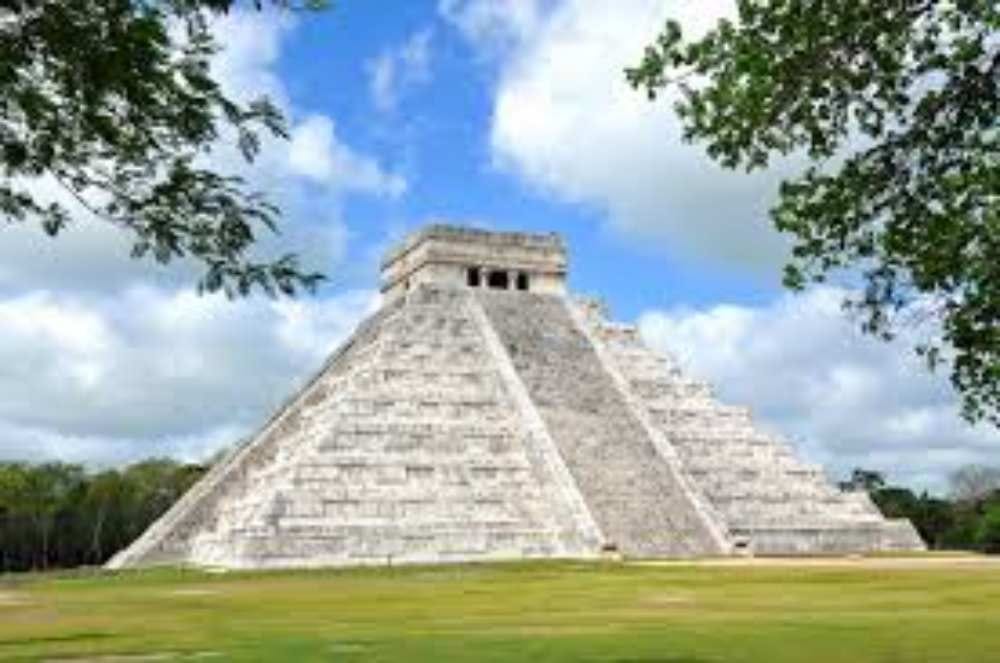
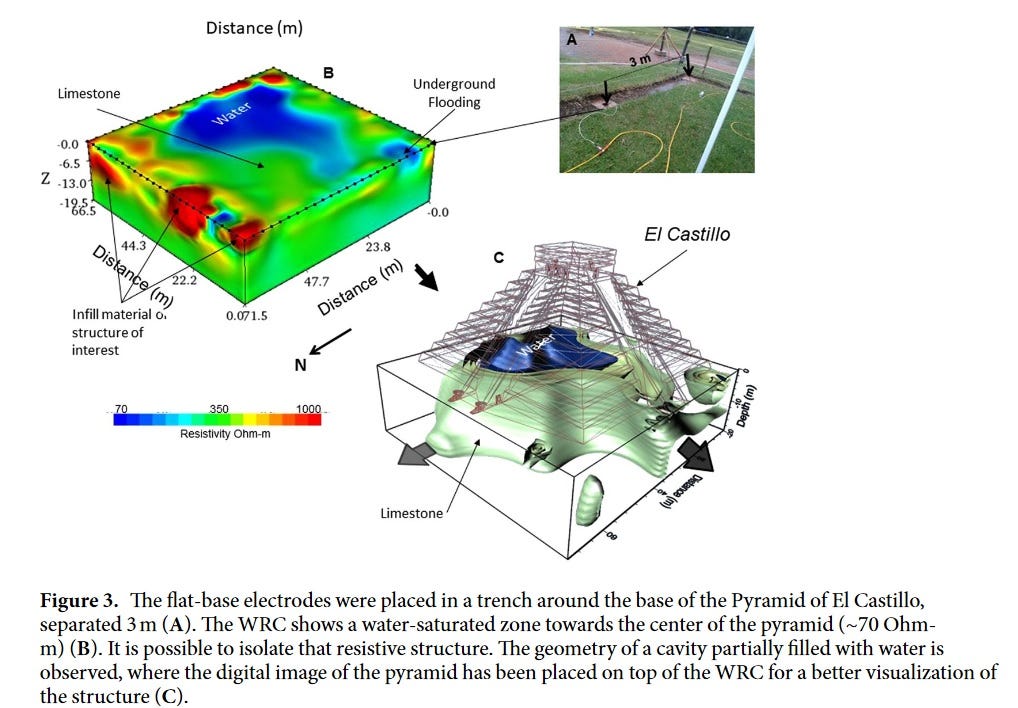
The hydrological connection of the cenote is fundamental: water flows from north to south through a network of interconnected caves, creating a dynamic system that not only supplied the city but might have had a deeper function. The pyramid of El Castillo sits directly atop this underground water source, replicating the same principle that Nikola Tesla would apply centuries later in his Wardenclyffe Tower: the reliance on water as an essential conductive medium.
This dependence on water resources is neither exclusive to Egypt nor a coincidence; it appears to be a technical requirement for any system designed to interact with telluric energy. Underground water, rich in minerals and in constant motion, functions as the necessary conductive medium to close terrestrial electrical circuits, allowing energy to flow from the subsoil into the structure and vice versa.
Tikal: The Pyramid of the Lost World
Thousands of kilometers from Chichén Itzá, in the jungle of Guatemala, the pyramid known as “The Lost World” in Tikal (built according to the official version around 600 BC) presents electromagnetic characteristics that have been scientifically documented, moving away from speculation into the realm of empirical measurement. The aforementioned researcher John Burke, along with his colleague Kaj Halberg, performed systematic measurements at the top of this structure using electrostatic voltmeters and high-precision magnetometers.
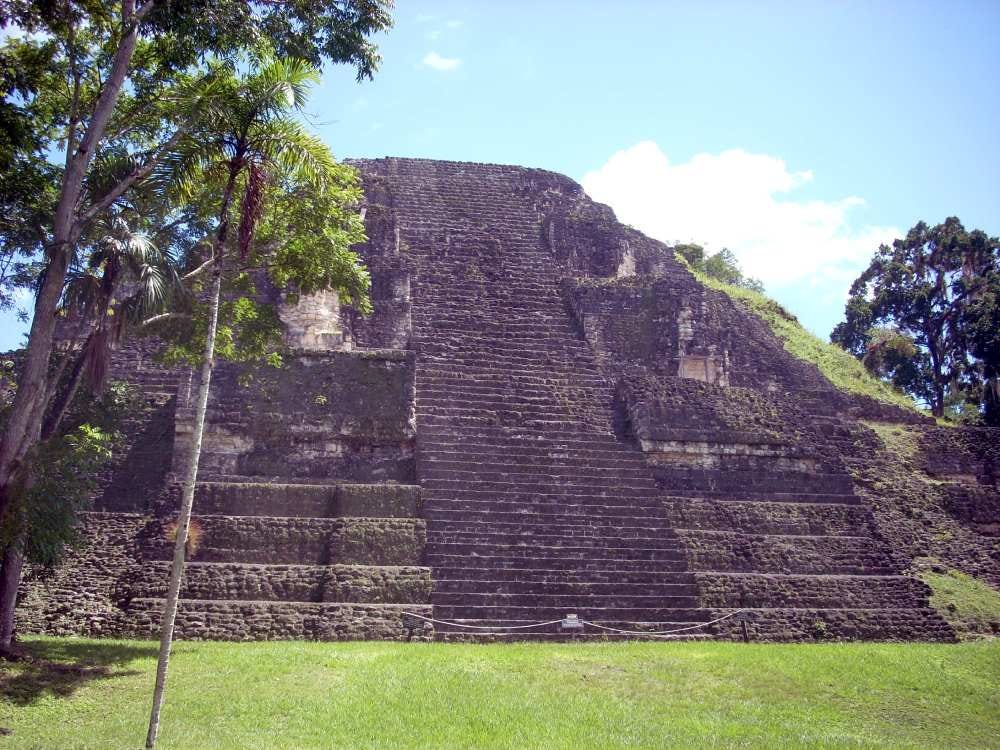
Their measurements revealed consistent patterns: at “The Lost World” pyramid in Tikal, Guatemala, he detected average changes of 908 volts in the static electrical charge of the air during the early hours of the morning, an energy peak that coincides with sunrise. Burke clarified that, while the figure might sound dangerous in a domestic context, it involved atmospheric static electricity rather than direct current; the static electrical charge in the air is of a different nature and poses no danger to living beings. Its presence indicated a significant accumulation of energy at those specific points.
What is fascinating is that this phenomenon did not go unnoticed by local inhabitants: for generations, farmers in the region have used the pyramid to “charge” their seeds before planting, placing them at the summit during specific periods. Reported results include higher germination rates, greater drought resistance, and better crop yields, suggesting that the electromagnetic fields generated by the structure have positive and measurable biological effects.
Burke’s investigations, complemented by subsequent geophysical studies, identified four key components that act in synergy within Mayan pyramids to function as magnifiers of telluric energy. However, more recent analyses suggest that the system is even more complex and includes additional elements:
Moving Underground Water: Natural flow through cenotes, underground rivers, and aquifers (as in El Castillo, Chichén Itzá) creates a dynamic conductive medium. Water charged with dissolved minerals acts as a natural electrolyte, facilitating the transport of ions and the conduction of telluric currents from the depths of the Earth’s crust to the surface.
Natural Geomagnetic Fields: Sites were selected for their location over geological faults or zones with high underground electromagnetic activity. These telluric fields present periods of high and low intensity during the daily cycle, with peaks coinciding with sunrise and sunset—moments the Mayans considered sacred and which align with Burke’s measurements in Tikal.
Specific Pyramidal Design: The stepped shape and astronomical orientation of the pyramid are not arbitrary; they act as an antenna or lens that focuses and amplifies the telluric fields pulsing toward the center of the structure. Pyramidal geometry concentrates energy in the internal chamber or at the summit, creating a measurable electrical potential gradient.
Conductive Fill Materials: The interior of the pyramids is not solid; it contains layers of fill with rocks selected for their electromagnetic properties, including veins of quartz, granite, pyrite, and other semiconductor minerals. These materials act as piezoelectric crystals that generate an electrical charge when subjected to mechanical pressure or vibrations, amplifying the effect of the telluric fields.
Astronomical Alignment and Resonance: The precise orientation of the pyramids toward cardinal points and celestial events (equinoxes, solstices) suggests that the builders understood the relationship between cosmic cycles and terrestrial electromagnetic fields. Variations in the ionosphere during solar events could have been captured and amplified by these structures.
Ventilation Systems and Airflow: Much like the Great Pyramid of Giza, some Mayan pyramids feature internal ducts that allow for airflow. This movement of ionized air through chambers with conductive minerals could have generated additional static electricity via the triboelectric effect.
Mercury and Heavy Minerals: Although less documented in the Mayan area than in Teotihuacán, the potential use of mercury and other liquid metals in sealed chambers could have served as a medium for energy conduction or transformation, given mercury’s excellent electrical conductivity and its ability to form amalgams.
These seven components work together to create an integrated system that transforms telluric, electromagnetic, and possibly cosmic energy into usable forms, whether for agricultural, ceremonial, or other purposes that we are only beginning to understand. The sophistication of this design suggests that the Mayan builders possessed deep knowledge of geophysics, electromagnetism, and resonance, and a technology far more advanced than what we have today—knowledge perhaps passed down that challenges our conventional understanding of technological development in pre-Columbian Mesoamerica.
THE HIDDEN PYRAMIDS OF CHINA
For decades, the world’s governments have woven a web of secrecy so dense that not even sunlight can pierce it. But there is a mystery that, despite efforts to bury it under layers of disinformation and ecological propaganda, continues to emerge like an impertinent ghost: the hidden pyramids of China.
Officially, there is only talk of the Great Wall, the Terracotta Warriors, and the accelerated modernization of the Asian giant. But what about the more than 200 pyramids scattered across Chinese territory—colossal structures that defy the imposed historical narrative? Pyramids that, according to witnesses and independent explorers, surpass any known construction in age and technology. Pyramids that the Chinese government has tried to erase from the map, not with bulldozers, but with something far more sinister: trees.
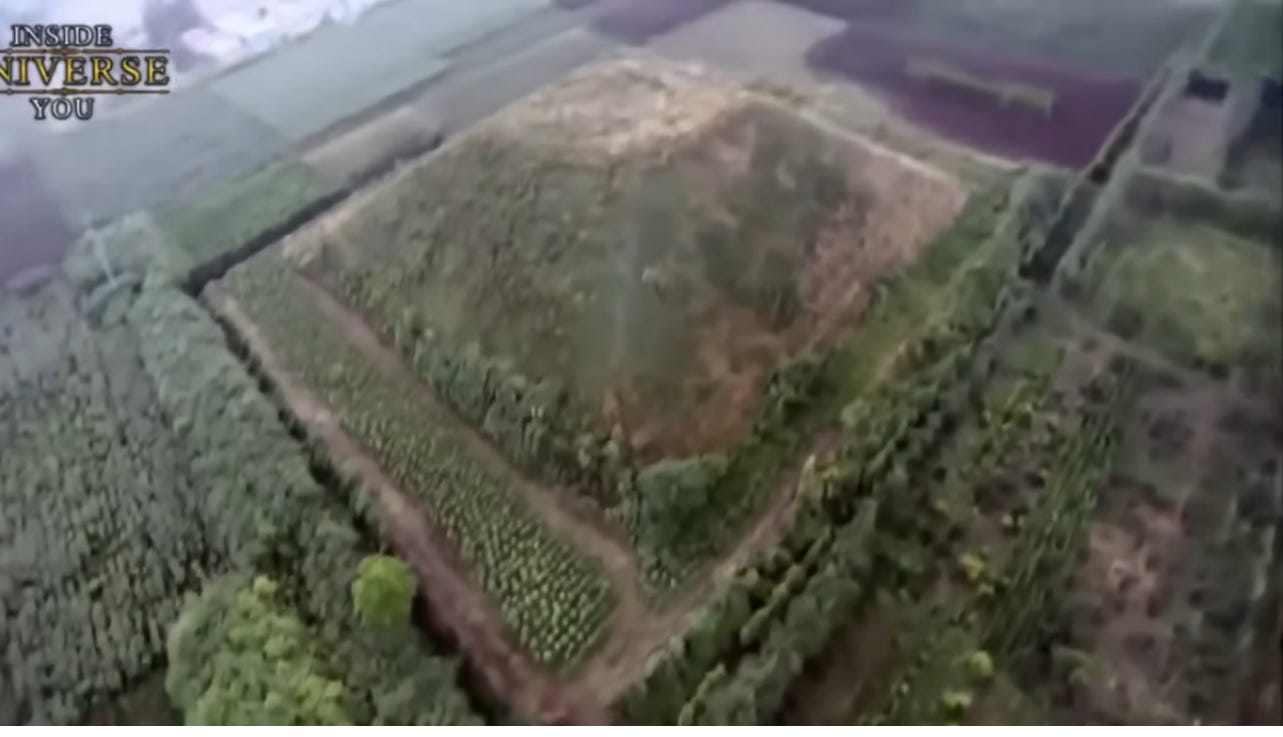
Yes, you read that correctly. Since the 1970s, the regime has promoted massive reforestation campaigns, presented to the world as a gesture of environmental awareness and an example of the fight against climate change. But satellite imagery, accounts from peasants, and leaks from former officials paint another reality: the trees are nothing more than camouflage, a green curtain to hide what must not be seen. Because if there is one thing the hidden powers fear more than the truth, it is that the people awaken and ask: Who built these pyramids? Why do they look so much like those in Egypt, Mesopotamia, or Central America? Is the history we have been told just another facade of the same global theater?
It is no coincidence that in every corner of the planet, the same symbols, structures, and elites appear repeatedly, as if the world were a chessboard and we were simple pawns. China is no exception. It is just another piece of the puzzle, another proof that humanity has been governed since time immemorial by a caste that knows the truth and hides it at any cost.
And what better way to hide a pyramid than by planting a forest on top of it? What better excuse than “saving the planet” to ensure that no one asks what lies beneath those millions of trees? But the question remains in the air, like the dust of centuries of lies: What are they really protecting? Ancient technology? Dimensional portals? Or perhaps the irrefutable evidence that our civilization is not the first, nor the most advanced, to inhabit this world?
One thing is certain: when a government insists so strongly that you look up at the treetops, it is because they do not want you to look down at what lies buried. And in China, as in Egypt and Mexico, and in all places where power refuses to release its secrets, the earth holds more truths than all the history books combined.
An example of this can be found on the outskirts of Xi’an, in Shaanxi province, where one of modern archaeology’s greatest enigmas stands: a valley guarded by 15 to 20 ancient pyramids, banned from the outside world for over a century.
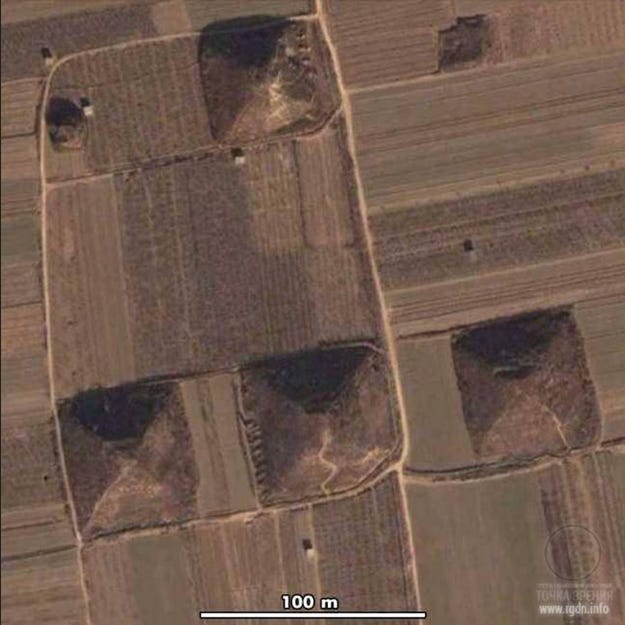
Just a few kilometers from the ancient capital of the Chinese Empire, there is an area marked on satellite maps but erased from tourist reality. Orbital images confirm it: they are there, aligned with astronomical precision, defying gravity and time. However, access is strictly forbidden. Neither foreign archaeologists, nor the curious, nor even most Chinese scientists can set foot on the site. Only local families are permitted to transit the surroundings, under one non-negotiable condition: do not excavate, do not climb, do not touch.
The legend began to take shape in 1912 when Fred Meyer Schroder, a Russian trader, ventured into the region guided by the Buddhist monk Bogdo. What he found left him breathless: a colossal earthen structure, partially devoured by vegetation, which he estimated reached 300 meters in height with a 500-meter base. It was larger than the Great Pyramid of Giza. It had no visible stairs or doors; only an imposing silhouette silhouetted against the Shaanxi sky.
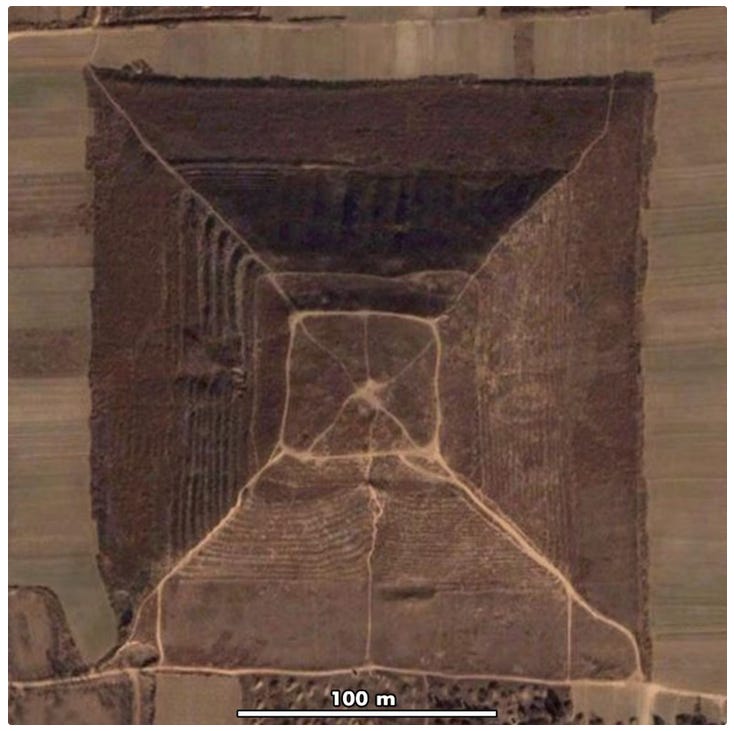
A year later, French archaeologist Victor Segalen confirmed the existence of the conical structure. But it was during World War II that the mystery took on a life of its own. In 1945, American pilot James Gaussman, flying over the area, reported a “gigantic white shimmering pyramid” whose peak looked like “a great jewel” flashing under the sun.
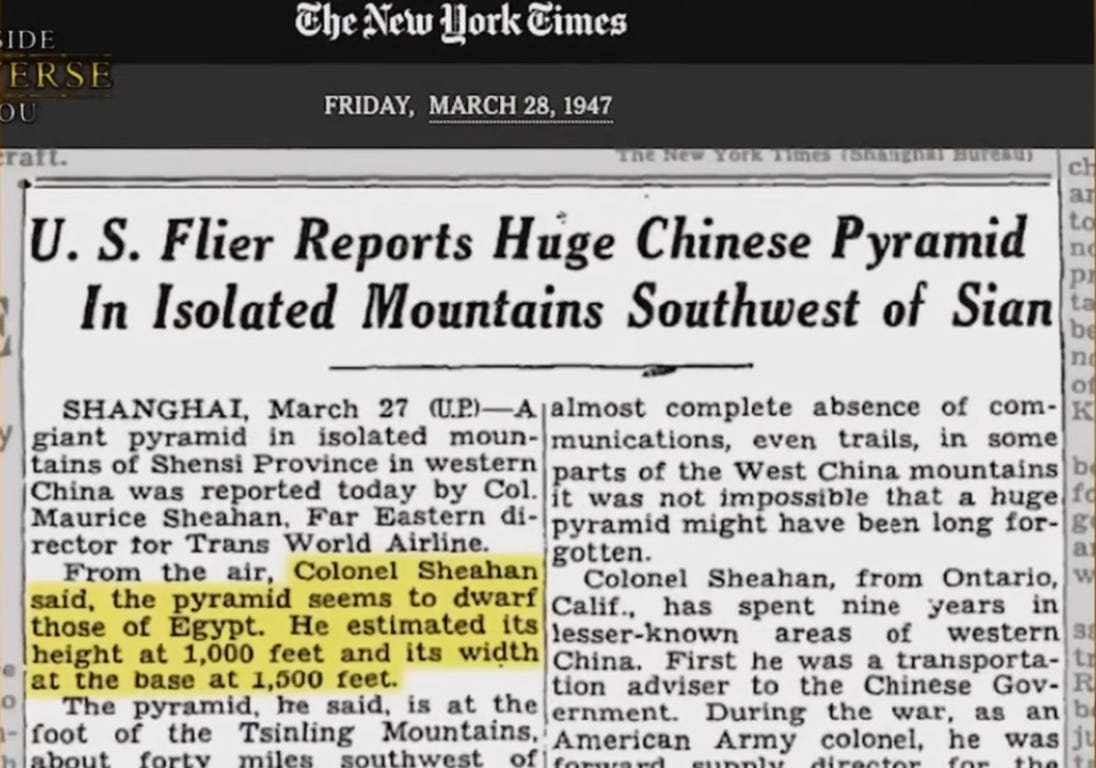
Photographic evidence arrived in 1947 courtesy of Colonel Maurice Sheehan. His image, published in The New York Times, showed a structure 300 meters high by 450 meters long. The response from Chinese authorities was swift and decisive: they discredited the find, labeling it “probably a burial vault.” Once again, the official world has taken charge of creating institutions to hide the truth in every sense; history would be no exception.
For conventional archaeology and the official world, the enigma has a logical answer: they are said to be burial mounds of emperors, possibly that of the legendary Qin Shi Huang (221-210 B.C.). With this answer, they hide the chronology and purpose of these pyramids. The ancient historian Sseuma Ts’ien recounted that this emperor ordered the destruction of ancient writings, which would explain the scarcity of documents. According to this version, the pyramids were intentionally camouflaged with trees and grass to resemble natural hills.
However, the numbers do not add up for everyone. Bruce Cathie, a New Zealand researcher, discovered a disturbing mathematical connection: the number 16,944 appears in the measurements of the Great Pyramid of Giza and, coincidentally, there are 16,944 minutes of arc between Giza and the tallest Chinese pyramid. His conclusion was blunt: “They were built by the same people.”
In October 1994, German researcher Hartwig Hausdorf decided it was time to see the truth with his own eyes. He climbed one of the structures and counted at least 20 constructions in the valley. When he showed his photographs to Chinese archaeologists, initial denial gave way to a forced recognition by the evidence.
It was then that Wang Shiping, a professor who would pass away shortly after, revealed data to him that does not appear in textbooks: the pyramids possess precise astronomical alignment and an antiquity we cannot imagine, far earlier than official chronology suggests. More unsettling still was his reference to ancient records of the era, which narrate “the arrival of emperors who descended from the sky on flying dragons.”
But the true secret of these structures lies not only in their astronomical alignment or colossal dimensions, but in what is hidden beneath the surface.
This coincidence with the pyramids of the Americas is curious. Ancient records from historian Sima Qian, written barely a century after the first emperor’s death, described the interior of the main burial chamber with disturbing precision: “Mercury was used to model the hundred rivers, the Yellow River, the Yangtze, and the seas, in such a way that they flowed mechanically.” For decades, official archaeology treated this account as a symbolic metaphor or mythological exaggeration, until modern technology allowed us to hear what the earth had to say.
In recent decades, teams of geochemists have conducted surface drilling and atmospheric measurements over the main mound, identified as the tomb of Qin Shi Huang. The results were conclusive: the soil over the burial chamber presents mercury concentrations of up to 250 parts per billion, far above the region’s natural background levels.
More recently, in 2020, a study published in Scientific Reports used LIDAR laser technology to measure mercury vapor emissions from the surface, confirming a constant flow that correlates exactly with the location of the sealed chamber. For researchers, this is no coincidence; it is the scientific validation of a 2,200-year-old chronicle.
Mercury: the conductive heart of the machine
Why mercury? What is so special about it that pyramids were built on top of it? From a physical perspective, elemental mercury possesses a set of properties that make it a theoretical candidate for unconventional energy conversion systems. As the only liquid metal at ambient conditions, its movement through a magnetic field can generate electrical current via magnetohydrodynamic induction (E = v × B), a principle used in modern MHD generators.
Simultaneously, its measurable Seebeck coefficient (~0.6 µV/K) allows it to transform thermal gradients into voltage, while its high density (13.5 g/cm³) and low viscosity facilitate the efficient transmission of mechanical vibrations, theoretically acting as a coupling medium in resonant systems. Added to this is its notable chemical stability: pure mercury does not oxidize easily in dry air, which would enable its functional preservation in sealed circuits for prolonged periods without significant degradation.
In the field of applied electromagnetism, metallic mercury has historically been used in switches, relays, and switching devices due to its conductivity and liquid state. When subjected to the combined action of electric current and magnetic fields, mercury can rotate to form controlled vortices—a direct demonstration of the Lorentz force, the same fundamental principle that governs the operation of electric motors. This ability to generate organized rotational movements under electromagnetic stimulation has motivated research into superconductivity and the fluid dynamics of conducting liquids, exploring its potential to manipulate energy flows or generate secondary fields.
On this physical basis, the hypothesis of mercury vortex engines applied to anti-gravity has been developed. The proposed mechanism suggests that by circulating mercury at high speed within an intense magnetic field—generated by superconducting magnets or electromagnets—a stable vortex of liquid metal is created; by simultaneously passing an electric current through the rotating mercury, an electromagnetic field would be generated that would interact with the vortex, theoretically producing a thrust force capable of countering gravity and generating levitation or propulsion.
This line of exploration has inspired experimental prototypes, especially in India, where teams linked to consortia like Mahindra & Mahindra have attempted to calculate the feasibility of generating thrust forces up to 20,000 newtons through this method. The idea, in turn, draws from references in ancient texts such as the Vaimanika Shastra, which describes the Vimanas or flying machines of the gods—propulsion technologies based on “mercury vortices” for flying craft, establishing a speculative bridge between ancestral knowledge and modern physics.
This combination of characteristics has driven, over the last century, lines of research exploring mercury’s possible relationship with gravitational phenomena. Between 1919 and 1920, physicist Quirino Majorana reported weight variation measurements in lead spheres when a 114 kg mercury cylinder was interposed as a “shield,” concluding a gravitational shielding coefficient λ ≈ 7×10⁻¹²; however, Henry Norris Russell subsequently demonstrated that, if real, this effect would alter planetary orbits in an unobserved manner, implying that λ must be at least 10⁴ times smaller than reported.
Decades later, in 2001, the Podkletnov and Modanese preprint (arXiv:physics/0108005) described an experiment with high-temperature superconductors subjected to high-voltage discharges and intense magnetic fields, reporting the emission of a “repulsive impulse” on small objects; although mercury is not an active element in the experimental setup, it is mentioned within the theoretical framework on vacuum fluctuations and quantum gravity, and the document remains unpublished in a peer-reviewed journal.
In the realm of intellectual property, recent Chinese patents such as CN102761296A (2012) and CN110857151A (2020) describe theoretical devices combining mercury in annular chambers with electromagnetic fields under principles of magnetohydrodynamic (MHD) fluid propulsion, without including validated experimental data or public implementation.
The metal’s ability to form vortices under electromagnetic fields, its stability in closed systems, and its recurring presence in archaeological contexts of high symbolic significance invite further investigation.
The Qinghai Enigma: The Pyramid with Metal Pipes
But what is truly surprising is found in the remote mountains of Qinghai province in northwestern China. Here stands a structure that defies traditional archaeological conventions: a pyramid approximately 61 meters high that features a baffling characteristic—metallic pipes embedded directly into the rock, emerging from its walls in patterns suggesting a deliberate technical function.
This discovery, made near Mount Baigong and the shores of Lake Toson, has generated intense debate in the scientific community, as there is no known parallel in the conventional ceremonial architecture of any ancient civilization. The pipes, some of which penetrate deep into the rocky structure while others protrude outward at specific angles, appear to have been installed with a precision implying advanced metallurgical and engineering knowledge.
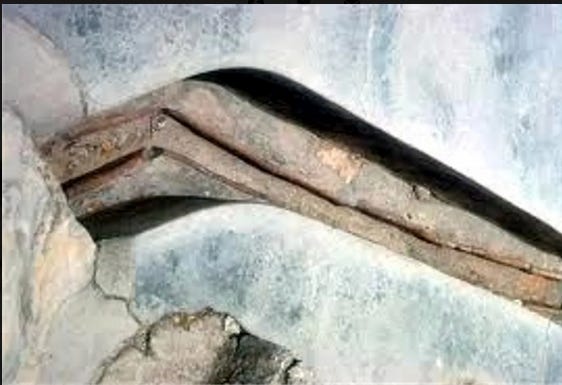
Laboratory analyses performed on samples of these pipes have revealed unusual chemical compositions that have intensified speculation regarding their original purpose. Metallurgical studies indicate they contain anomalous percentages of iron oxide, along with traces of other elements suggesting exposure to extremely high temperatures. Some researchers interpret these findings as evidence that the pipes were part of high-pressure fluid conduction systems or even industrial cooling mechanisms. The presence of these components in a pyramidal structure reinforces the hypothesis that the site might have had an industrial or technological function, beyond any traditional ceremonial or funerary purpose.
The location of this structure adds another layer of mystery to the enigma. Unlike Egyptian or Mayan pyramids, built over underground rivers or essential water channels for material transport, this Chinese pyramid stands in an arid and remote region, far from any significant source of fresh water.
But just as occurred in the Sahara, data suggests this region also once had water—a fact that has considerable scientific backing from the perspective of paleoclimatology. The comparison with the “Green Sahara” is not only possible but aligns with what we know about global climatic fluctuations during the Holocene.
Just as the Sahara experienced the African Humid Period (approximately between 14,500 and 5,000 years ago), during which the region was covered with savannas, lakes, and rivers, the Tibetan Plateau and Qinghai province also underwent drastic environmental transformations. Lake sediment records and pollen analysis indicate that during the Holocene Climatic Optimum (approximately 10,000 to 5,000 years ago), the Qinghai Lake basin and surrounding areas experienced a significant increase in precipitation and an expansion of vegetation. Qinghai Lake, which today is a body of saltwater in a semi-arid environment, reached much higher levels, creating a landscape of humid steppes and even open forests on mountain slopes.
In the specific case of the Qaidam Basin, where Mount Baigong and the mysterious pyramidal structure are located, geological evidence suggests the region hosted extensive paleolakes during interglacial periods and humid phases of the Holocene. This means that at the time the pyramid was supposedly built (if we accept an ancient dating), the environment could have been radically different from the saline and arid desert we observe today: a fertile valley with abundant water resources, capable of sustaining not only human settlements but also activities requiring large volumes of water, such as agriculture, metallurgy, or, hypothetically, energy processing systems.
This perspective adds a new layer of plausibility to the theories attributing industrial or technological functions to the structure. If the pipes embedded in the rock were part of a fluid conduction system, the presence of a humid environment and stable water resources would have been a fundamental requirement for its operation. Similarly, if the pyramid functioned as a resonator or generator that relied on water as a conductive medium (similar to the hypotheses proposed for Giza or Teotihuacán), a landscape with surface aquifers and nearby lakes would have provided ideal conditions for its operation.
An initial report from the Chinese state news agency Xinhua (2002) cited analysis from the Beijing Institute of Geology conducted using thermoluminescence. According to that report, the pipes embedded in the rock date back approximately 150,000 years, which would place them in the Middle Pleistocene—long before the appearance of *Homo sapiens* in the region and any known civilization capable of working iron, according to archaeological doctrine.
Official Chinese archaeology, for its part, tends to associate artifacts from the area with more recent historical periods, such as the Han Dynasty or even later eras. If the structure was built during the Holocene Climatic Optimum (5,000-8,000 years ago), the “Qinghai Orchard” hypothesis would fit perfectly; if it is older or more recent, the climatic scenario would be different.
In synthesis, the idea that the Chinese pyramid was erected in a fertile and humid environment, similar to the Green Sahara, is scientifically coherent with the paleoclimatic records of the region. This parallelism not only enriches our understanding of the environmental context in which these structures might have operated but also reinforces the notion that many of the planet’s most arid zones were, in a not-so-distant past, vibrant landscapes capable of harboring complex civilizations and sophisticated technologies. The key to validating this hypothesis lies in accurately establishing the chronology of the construction and correlating it with climate reconstruction data—data that will never be revealed by the official world.
The star connection that official archaeology refuses to acknowledge
But the mystery of the Chinese pyramids does not end with mercury or the pipes of Mount Baigong. Do you really believe it is mere coincidence that civilizations separated by thousands of kilometers and supposedly without any contact built identical structures perfectly aligned with Orion’s Belt? The pyramids of Xi’an, Teotihuacán, and Giza not only share a precise astronomical orientation pointing directly to the three stars of the celestial hunter’s belt, but they also hold mathematical proportions impossible to explain with the technology of their time.
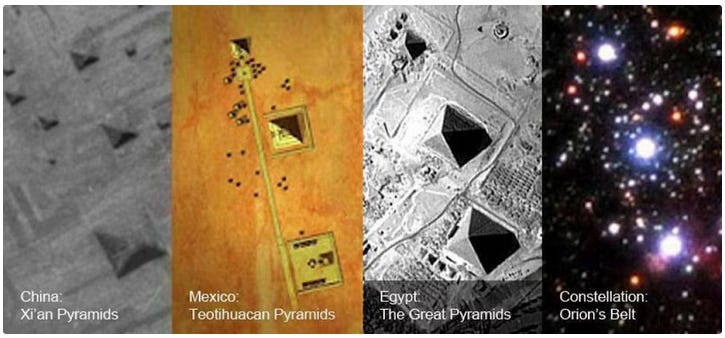
Conventional archaeology calls this “coincidence,” but any awakened mind knows that when three distinct cultures in China, Mexico, and Egypt replicate the same stellar pattern with millimetric precision, there is a common architect behind it all. We have been sold the story that they were built by slaves with ropes and logs, but how do they explain that these structures function as giant energy antennas tuned to specific cosmic frequencies?
Every ancient culture, without exception, speaks of the same “gods” who descended from the stars to rule. The Egyptians called them the Neteru, the Aztecs the Quetzalcoatls, the Chinese the celestial Yellow Emperors. Is it not suspicious that all these civilizations describe luminous beings who came “from the sky” in chariots of fire or feathered serpents to leave them a knowledge now forgotten?
The answer is obvious yet terrifying: it wasn’t us. An advanced civilization visited Earth in antiquity and planted these structures as beacons, as energy anchor points, or perhaps as markers for a future return. The pyramids are not tombs or conventional religious temples; they are ancient technology, a legacy from stellar visitors who deemed us intelligent enough to build their monuments, but not enough to understand their true purpose.
Today, the pyramids of China are still there. Satellites monitor them from space, tourists search for them in vain on maps, and historians debate in university hallways. To official science, they are imperial tombs with no greater secret. To alternative researchers, they represent a missing piece in the puzzle of human history, a possible ancient transoceanic connection, or the trace of a lost technology.
As long as the Chinese government maintains forbidden access and independent scientific excavations remain impossible, the Valley of the Forbidden Pyramids will continue to be what it is today: a monument to silence, guarded by the earth, time, and Asia’s oldest state secret.
In the next installment, we will continue connecting the dots that official history refuses to join: a global network of pyramids, an ancestral energy system, and the real reason they want us to keep believing they are simple tombs. It is not architecture; it is technology. The truth can no longer be hidden.
BIBLIOGRAPHY AND SOURCES
Chávez, R., Cifuentes, G., Hernández, E., Tejero, A., & Argote, D. (2018). The hidden sinkhole beneath the Kukulkán pyramid at Chichén Itzá, Mexico. Scientific Reports, 8(1), 13936. (https://doi.org/10.1038/s41598-018-33888-9)
Universidad Nacional Autónoma de México (UNAM). (2015, August 13). Descubren universitarios un cenote debajo de la pirámide de Kukulkán, en Chichén Itzá [Boletín DGCS-466]. Dirección General de Comunicación Social. (https://www.dgcs.unam.mx/boletin/bdboletin/2015_466.html)
AMS 14C Dating of Materials Recovered from the Tunnel under the Temple of the Feathered Serpent in Teotihuacan, Mexico. Authors: S Gómez-Chávez, Corina Solís, J Gazzola. (https://doi.org/10.1017/RDC.2016.77)
Burke, J., & Halberg, K. (2005). Seed of Knowledge, Stone of Plenty: Understanding the Lost Technology of the Ancient Megalith-Builders. Council Oak Books. ISBN: 978-1571781840.
Majorana, Q. (1920). On gravitation. Theoretical and experimental researches. Philosophical Magazine, 39(233), 488-504.
Podkletnov, E., & Modanese, G. (2001). Impulse Gravity Generator Based on Charged YBaCuOy Superconductor with Composite Crystal Structure. (https://arxiv.org/abs/physics/0108005)
Bertolami, O., Páramos, J., & Turyshev, S. G. (2008). General Theory of Relativity: Will It Survive the Next Decade?* In Lasers, Clocks and Drag-Free Control (pp. 27-74). Springer. (https://doi.org/10.1007/978-3-540-34377-6_2)
State Intellectual Property Office of China. (2020). CN110857151A: Anti-gravity propelling device for mercury spheres. (https://patents.google.com/patent/CN110857151A/en)
Zhao, G., Zhang, W., Duan, Z., et al. (2020). Mercury as a Geophysical Tracer Gas - Emissions from the Emperor Qin Tomb in Xi’an Studied by Laser Radar. Scientific Reports, 10, 10414. (https://doi.org/10.1038/s41598-020-67305-x)
The Baigong Pipelines.
 | A guest post by
|
A fascinating article and the pipes in the pyramids, even more so.
Once again, a magnificent article and information. The pyramids of China are interesting.